Is Your London Box Hedge Dying? Box Caterpillar, Blight,…
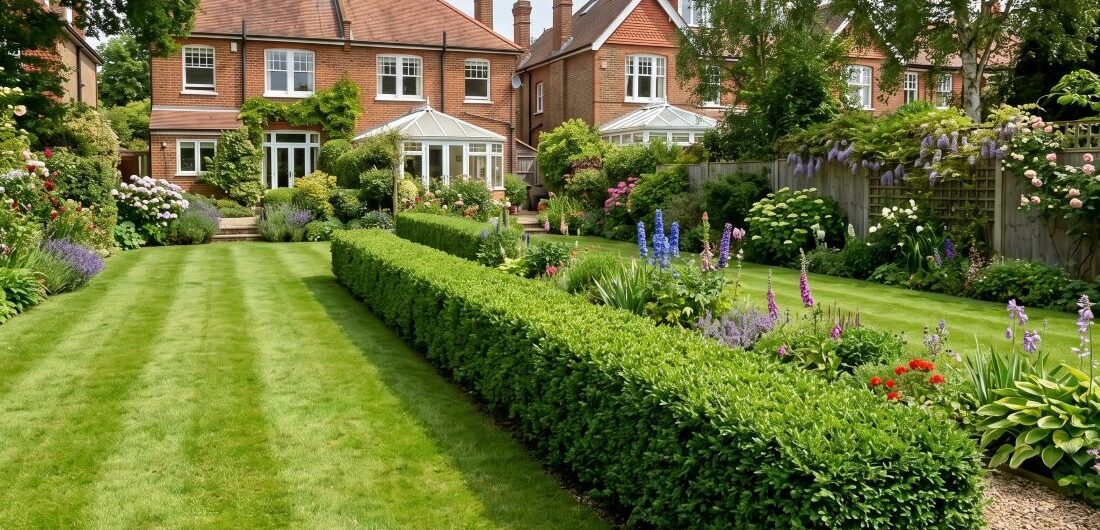
The crisp green edging that frames so many London gardens, the low box hedge around a rose bed, the pair of clipped balls either side of a front door, the parterre that has held its shape for decades, is under siege as never before. All over the city, gardeners are finding their box turning a sickly straw colour, dropping its leaves and opening up into bare, twiggy patches where there was once dense evergreen. If that describes the hedge outside your window, you are far from alone, and the first useful thing to know is that the cause is almost always one of two specific problems rather than anything you have done wrong.
The two are quite different. One is a hungry caterpillar that can hollow out a hedge from the inside in a matter of weeks; the other is a fungal disease that creeps through the foliage in damp weather and is far harder to shift. Telling them apart is the first step, treating what can be treated is the second, and knowing when to admit defeat and plant something better is the third. None of it is as hopeless as a dying hedge can make it feel.
Why Box Is Struggling Across London
Box, Buxus sempervirens, has been the backbone of formal British gardens for centuries, prized for its dense, small-leaved evergreen growth and its willingness to be clipped into crisp hedges, edging and topiary. London took to it with particular enthusiasm, and it still lines countless front gardens, squares and courtyard parterres across the capital. That very popularity is now part of the problem: where box grows everywhere, the troubles that attack it spread easily from garden to garden.
Two of those troubles have arrived more or less together. The box tree caterpillar, the larva of an Asian moth first found in British gardens around 2011, became established across London and the South East within a few years and now ranks as the single most common pest enquiry the Royal Horticultural Society receives. At the same time, box blight, a fungal disease that took hold in Britain in the 1990s, has spread widely and thrives in exactly the warm, humid, sheltered conditions that a crowded city garden provides. London’s density works against the gardener here, as shared walls, neighbouring hedges and still, enclosed air give both the moth and the fungus an easy path from one plot to the next.
The result is that a great many London box hedges are now fighting on two fronts. The good news is that the two problems look quite distinct once you know what to look for, and the right response to each is different.
Box Tree Caterpillar, and How to Fight It
The box tree caterpillar is the more dramatic of the two and, fortunately, the more treatable. The caterpillars themselves are greenish-yellow with black stripes and glossy black heads, and they feed hidden within a tell-tale mesh of white webbing spun among the leaves and stems. They eat voraciously, working outward from inside the bush, so by the time the damage shows on the surface a hedge may already be badly affected. Left alone, a single generation can strip a mature hedge almost bare in three to four weeks, and in London’s mild climate there are two or three generations between spring and autumn.
Catching the problem early is everything, which makes monitoring worthwhile. A pheromone trap hung up from around the start of May will catch the male moths and tell you when the adults are flying, your cue to start checking the foliage closely for young caterpillars and webbing. Where only a little box is involved, picking off caterpillars by hand and pulling away the webbing can keep numbers down. For anything larger, the most effective and wildlife-friendly control is a spray of Bacillus thuringiensis, a naturally occurring bacterium sold for the purpose: the caterpillars eat it, stop feeding within hours and die within days, while bees and other insects are left unharmed. It must be sprayed into the heart of the hedge where the caterpillars feed, not merely over the surface, and repeated through each generation and after heavy rain. Broad chemical insecticides are far less useful, since the webbing shields the caterpillars and the sprays harm the pollinators you want to keep. Biological nematodes, watered onto the foliage on a mild evening, offer another organic route, and because young caterpillars overwinter tucked inside webbed-up leaves, a careful inspection in early spring lets you remove the first of them before a new season’s feeding begins.
Telling Caterpillar Damage From Blight
Because the two main box problems call for completely different responses, it is worth pausing to identify which one you are dealing with. Box tree caterpillar always leaves evidence of the animal itself: the fine, cobweb-like webbing, the green and black caterpillars within it, and leaves chewed into curved notches, often alongside small piles of dark droppings. Box blight, by contrast, leaves no webbing and no insects. Instead you will see dark brown or black spots on the leaves, foliage turning brown and falling to leave bare patches, and sometimes black streaking on the young stems. In wet weather the disease may show white spore masses on the undersides of leaves, while the less serious Volutella blight produces pink ones. The simple rule is this: if there is webbing, think caterpillar; if there are spots and dieback but no webbing, think blight.
Box Blight, the Harder Problem
Box blight is the more disheartening of the two because it is so much harder to defeat. It is caused chiefly by the fungus Calonectria pseudonaviculata, once known as Cylindrocladium buxicola, with a milder relative, Volutella blight, sometimes adding to the damage. The fungus flourishes in warm, wet, poorly ventilated conditions, and it spreads with alarming ease, carried on the blades of shears, on gloves and clothing, on infected cuttings, and splashed from leaf to leaf by rain. Once it is established in a dense hedge in a sheltered London garden, those are close to ideal conditions for it to persist.
What makes blight especially frustrating is that there are no fungicides available to home gardeners that are approved to control it. Management therefore rests entirely on hygiene and good cultural practice. That means improving the air movement around the plants, clipping only in dry weather and disinfecting tools between plants, watering at the base rather than over the foliage, and clearing away every fallen leaf and all prunings, which should be binned or burned rather than composted. Affected growth should be cut out promptly. It also helps not to feed box heavily, since the lush, soft growth that rich feeding encourages is the most vulnerable of all, and to thin a crowded hedge so that air can move freely through it. Caught very early, and in an airy position, box blight can sometimes be held in check this way. Caught late, in a humid, crowded spot, it often wins, and that is the point at which many London gardeners decide the time has come to plant something else.
The Best Alternatives, and How to Make the Switch
The encouraging part is that replacing box need not mean losing the crisp, clipped formality it gave the garden, and every plant below sidesteps both the caterpillar and the blight entirely, since neither troubles anything outside the box family. The long-standing favourite is Japanese holly, Ilex crenata, whose small, glossy dark leaves look remarkably like box and clip just as neatly into hedges, balls and cloud-pruned shapes; ‘Dark Green’ is the cultivar held to resemble box most closely, with ‘Convexa’ and ‘Stokes’ also widely grown. Its one weakness is a dislike of hot, dry soil, where it can yellow and fade, which makes London’s moisture-retentive clay rather a good home for it, provided the ground does not bake.
Where you want something tougher and more forgiving, Euonymus japonicus, in compact forms such as ‘Jean Hugues’, ‘Green Spire’ and ‘Microphyllus’, makes a glossy, near indestructible low hedge that shrugs off shade and pollution. Pittosporum tenuifolium, including the neat purple-tinted ‘Tom Thumb’ and the rounded ‘Golf Ball’, clips beautifully and revels in London’s comparatively mild winters, though it likes shelter and a brisk trim twice a year. For the most refined and longest-lived result, yew (Taxus baccata) cuts low and crisp and lasts for generations, asking only that it never sits in waterlogged ground, so heavy clay needs opening up before planting. Cheaper and quicker, the box-leaved honeysuckle Lonicera nitida gives a passable box impression in a hurry, at the cost of needing clipping more often to stay tidy. Beyond these mainstays, small-leaved berberis, rounded hebes and the box-like Podocarpus all have their place, and many designers now mix two or three of these evergreens deliberately, using the subtle differences in leaf colour and texture to add interest that a single block of box never offered.
When you do make the change, take the chance to do it properly. Dig out the old box together with as much fallen leaf litter and root as you can, since blight spores linger in debris and soil, and avoid replanting box, or its close relatives such as sweet box, in the same spot. Refresh the ground with fresh compost before planting the replacement, and the new hedge will establish all the faster, ready to hold the shape and structure that made box so loved in the first place.